Showing posts with label Viking metal. Show all posts

Thursday, 21 July 2011

Why Kampfar Respect Women

Originally written for Soundshock.com


Since signing to Napalm Records for their 2006 release ‘Kvass’, Norway’s Kampfar have received a significant deal of attention worldwide. In the last two years, the black metallers have managed to play prestigious metal festivals such as Wacken and Hellfest and soon they will embark on their debut North American outing. But despite the peaks they have accumulated, frontman Dolk considers these past two years the most strenuous and draining of Kampfar’s career since their inception in 1994.


“When a band gets more interest, in a way, you have to make new decisions every single day and it starts to become more like a job. It feels at least sometimes that it’s not good to be in a band any more.” It has been two years since
 Kampfar’s last comprehensive tour and Dolk is more than enthused to return to the road, delivering a stellar show to those in attendance. “I’m really happy to be playing again and I haven’t felt like that for the last two years. “ Drummer Ask submits the footnote: “We finally get the reward of the stress and the chaos.” This year marks the release of the Norwegians’ fifth album ‘Mare’, a mature release adding a bevy of variety to the black metallers’ catalogue. Naturally, Dolk is proud of the album but is more astounded by the attention the release has earned: “We sold as many albums of ‘Mare’ in the first five days as we did with our last album for two years. So it was like “Wow!”” Perhaps this impressive result can be partially attributed to Kampfar working with legendary metal producer Peter Tägtgren for the first time. “It was a natural choice. For me at least, it was very very important that he wanted to do this because we didn’t want to go into a studio because it’s a famous studio or it’s a famous guy doing the sounds. We wanted to take a new direction, of course, to create art. We needed someone who wanted to push the boundaries and limits to get with us. It was really important for me that he really wanted to do this album, not just “Yeah, I’ll do it,” but with passion. The last time I talked to Peter before we really decided to go that way, I asked him “Are you really up for this?” and he said “Fuck yeah!” The only thing we can say is in some ways it’s bad that we didn’t do this earlier.”

Ask highlights how important it was to have a producer who knew precisely what the band needed for their record and this kind of producer would have to be well-versed in all kinds of music as opposed to exclusively black metal. “We’ve always been a bit stubborn about keeping it a little on the low-fi. We’ve always taken thing away and this time we said “Fuck it, we’ll do everything. We’ll see what happens because if it doesn’t work you can always remove things.” So we choose to work with a producer who could do bigger productions and it’s very interesting how focused he is because we played Hellfest last year and he played there with Hypocrisy and the studio had been booked well in advance. We were watching Fear Factory play from the side of the stage because we both love the drummer and I’m talking to him and he’s well drunk. I’m explaining exactly what kind of sound I want for the studio and he remembered everything and had everything set up for that sound and he completely nailed it, exactly what I wanted. He thinks with a band. He doesn’t go in there and say “OK I’m going to give you my sound.” He says “I’m going to give you the sound that is best for you.”” Naturally, Kampfar will not consider anyone else when producing their next album.

‘Mare’ is something out of the ordinary for Kampfar and indeed black metal as a whole. The album is dedicated to all those women brave enough to subscribe to their own lifestyles and follow their own paths in life. This idea was inspired by the fate of women who were misunderstood by priests hundreds of years ago in Norway and were branded a witch and burnt. Ask sheds light on Kampfar’s only profound religious remark: “The thing is that to be a woman today and do what you want to do then maybe it’s a little harder than men but two hundred years ago, it was a lot worse. If you were a woman two hundred years ago and you said “No, I want to do my thing. I want to learn about what I want to learn,” [they set you on fire]. That’s our religious statement.”

Kampfar’s fortunes have not come without misfortunate. Late last year, founding member Thomas decided to part ways with the band on good terms. Thomas’ guitar work is instantly recogniseable and signature to Kampfar, carving a unique identity for the band. “The reason his guitar playing is quite different to other guitars is because he’s actually playing piano on a guitar. He thinks in piano. There were never two guitarists so he always played two melodies at once, basically, two harmonies at once. He plays deceptively simple. He’s actually an incredibly skilled musician,” Ask notes. Dolk is highly optimistic about Kampfar’s future with one of the founding members now absent from the line up: “We’re gonna nail it, without Thomas or not. We’re still brothers. When I go back to Norway, we’re having a barbecue party and he’s invited. We’re really connected but we just had to stop work with this kind of music together. We ended the line there, really.”


With the unhinged success of ‘Mare’, Kampfar’s position as co-headliners on tour with black metal stalwarts Secrets of the Moon and Vreid and a
highly anticipated North American tour, the band’s limits are not yet capped and they will continue to harvest a multitude of success that most black metal bands will never achieve. Kampfar demonstrate that persistence and artistic endeavour is the key to their outstanding results.

Saturday, 30 January 2010

The Evolution of Kampfar


Norway's Kampfar have a substantial fanbase now and have made festival appearances at premiere metal festivals such as Germany's Wacken, Party San, Norway's Inferno and after this year, Hellfest in France. With four full-length albums under their belt, Kampfar's journey from obscurity to their current position is a storied one.

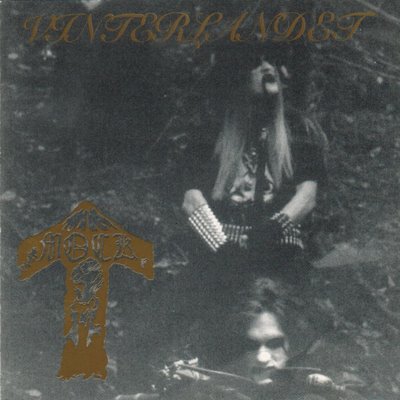
Kampfar originally began life as the black metal band Mock in 1992. The three piece from Gressvik released a demo entitled Cold Winter in 1994, a split with the German band Tumulus in 1995 and the EP Vinterland in the same year on the highly acclaimed (at least in underground circles) Hammerheart records. Musically, Mock sound like a primitive atmospheric black metal band ala early Burzum but less aggressive (although it does feature Dolk's recognisable, vicious rasps which sound unchanged compared to modern Kampfar) with more commendable drumming. 'Call the Eternal Winter' even has an eerie organ in it which divulges an element of gothic mystery to the music. Lyrically, the band avoided Satanic/anti-Christian cliches and opted for talking about freezing temperatures and Winter, much like Immortal. Mock actually became defunct in 1994 - the three band members were interested in pursuing radically different kinds of music (one member went on to join the EBM band Apoptygma Berzerk) [1] - before the EP was released and mainman Dolk (Norwegian for 'dagger'. His real name is Per-Joar which translates to 'mountain warrior' [2]) went on to conceive Kampfar. Fortunately, however, in 2007 Agonia Records re-released the tracks from the split and the EP in the compilation 'Mock', limited to 1000 copies.

Kampfar (which is an ancient Norse word for Odin or Wotan that warriors would cry before entering battles to heighten their performance [2]) was to be Dolk's continuation of his vision that Mock incited. In 1994, Dolk was seeing a girl whose brother was Thomas. Thomas originally played the piano and has a strong background in classical music. Dolk desperately needed a guitarist, having written the song 'Kampfar' on his bass and needing a guitarist to record it, and Thomas satisfied the position [3]. Dolk has stated that he has always attempted to distance Kampfar from the abundance of Norwegian black metal bands that were spawning at the time. The band designed a logo that did not immediately resonate the symetric, gothic type-face or illegibility of other black metal bands and they dropped the corpse-paint of Mock, "It was really a strange thing because people didn't understand the concept of black metal without corpse-paint." [3] Dolk evades labelling Kampfar black metal, which he considers relates to the Satanic; he opts to dub his band 'Norse pagan folklore metal'.

A demo restricted to 250 copies was released in 1995 on the respected Season of Mist, recorded between 1994-1995. In the same year, the pair's debut self-titled EP was recorded. Bearing the colourful image of a Norwegian landscape on its front cover, the release could be disregarded as black metal, considering the archetypal black and white covers of black metal bands in the mid-nineties. With Dolk handling vocal and drumming duties and Thomas covering guitars and bass, the EP is undeniably the foundation for Kampfar's modern sound, with thick organic atmospheres contrasted sharply with aggressive buzzing, both created by the guitar. The song 'Kampfar' clocks in at over nine minutes, beginning rather relaxed before launching itself into more violent passages akin to a more thoughtful early Bathory, escalating towards icy highlights and concluding with proud, warrior-esque clean vocals, similar to what Fenriz does with Storm whose sole album was released in the same year as this EP. 'Hymne' sounds distinctively Norse and with subtle clean vocals used sparsely for the intro: "Hymne til Odin", it is clear that this song pays homage to the Norse god Odin, often considered a clichéd theme in contemporary metal. The final track is 'Hjemkomsten' (which translates to 'The homecoming'). Laden with synths, 'Hjemkomsten' subtracts the black metal guitar, reducing the frosty atmosphere, and focuses on melody with a simple yet complimentive drum beat. The music evokes images of exploration, folklore and of course nature. This track displays Thomas' classical influences best and tottering over the two minute mark, the song retains the listener's interest throughout as well as underscoring that Kampfar are more than a simply a black metal act.

In 1997, Kampfar released their debut full-length album 'Mellom Skogkledde Aaser' (which translates along the lines to 'across wood-covered hills') on Malicious Records, recorded in X-ray Studio in September and October of 1996. All of the songs extend beyond six minutes and there is no confirmation of stagnation. Opening with piercing female screams, the album stings into 'Valdogg' with an incredible multi-dimensional guitar sound, previously unknown to Kampfar but destined to become their trademark, unique sound. Melody is married with the abrasive guitars as heard on the self-titled observation, forming what is now popularly described as pagan metal (Viking metal meets black metal). There is no overt use of keyboards or any component that can be classified as folk metal, which is certainly one of the many prominent strengths of this album [4]. The atmosphere is substantiated further with seething guitar rhythms and the melodies adorn it with the icy temperatures Kampfar usually employ, only they sound more accentuated. A cleaned up version of 'Hymne' makes an appearance on the album with a few additional seconds. The structures feel natural as opposed to forced or splintered. Even in modern times, this stands as one of the greatest contributions to black metal.

The following year, the band released another EP named 'Norse' on Hammerheart Records. The title-track is noticeably more upbeat than anything captured on 'Mellom Skogkledde Aaser', having been written in a major key, making it significantly more accessible. Interestingly enough, although this song is less atmospheric in the traditional sense, it comes across more vividly. This is also Kampfar's first musical venture into the English language, although the other songs are in Norwegian. On the whole, the guitar leads have progressed greatly and the melodies are easier to pick out. 'Troll' is an inferior song to 'Norse' which is relentless in its progression, but 'Troll' is still earns repeated listens with its acoustic introduction and the addition of synths later on. Closing track 'Tæring' serves as an outro, coming across as fairly uplifting and closer to folk than the previous songs.


After the 'Norse' EP, Kampfar unleashed their sophomore album on the metal world. 'Fra Underverdenen' (which translates as 'from the undergrowth') was released in 1999, again on Hammerheart records. It picks up from the EP; 'Norse' is on the tracklisting. Kampfar experiment more on this album, moving at various tempos, drawing out their ductile guitar melodies into a bevy of alternative styles, all while ignoring the use of archetypal or tacky synths. The atmosphere is different - thick and suffocating at times yet unlike anything they band has previously committed to record. The inclusion of a digeridoo can be heard on 'Troll, Død Og Trolldom' and a cello on 'Svart Og Vondt' too which illustrates how far Kampfar have come in a such a brief amount of time. The Norwegians still attain their aggressive roots with 'Mørk Pest' juxtaposing visceral passages with melodic ones, typical of Viking metal but Kampfar are certainly one of the first to employ it so brazenly. This is a sublime example of Kampfar's innovation.


Unfortunately, events ground to a halt after 'Fra Underverdenen' when Thomas and Dolk went through personal issues that set Kampfar on a lengthy hiatus. These problems would have to be solved before the pair could return to making music together. During the years of inactivity, Dolk received several letters each week from fans questioning what happened to Kampfar. These served as an inspiration for Dolk to continue with Kampfar at some point. Three years later, the Norwegians reactivated Kampfar and were given two options: to continue the band as before or to get more members and expand into a live band. Previously, the band had received offers to perform live but always refused due to only being a two-piece [1]. However, they selected the latter option with ease and found suitable musicians in two years; Kampfar were now joined by drummer 1113 (who now lives in the Netherlands) and bassist Jon Kabber in 2003, the latter of whom Dolk met while doing session vocals for the black/death metal band Gruesome [2].


The new Kampfar line up


Kampfar joined the Austrian label Napalm Record's roster who Dolk has had intense links with since the mid-nineties. The label showed the most interest in the band, as opposed to money which suited Kampfar impeccably. In 2006, Kampfar's first two albums were re-released by their new record label who bought the rights for the full-lengths. The Napalm pressing of 'Fra Underverdenen' comes with the 'Norse' EP as an extra. Both of these albums had been sold out for almost five years so the re-release was a positive action from Napalm. The first pressing of 'Mellom Skogkeldde Aaser' sold over 6,000 copies, yet Thomas and Dolk received nothing [1]. It was sold to Century Media and Napalm original bought the rights from them and Kampfar are now benefiting richly. The self-titled mini-CD has not been re-released because Season of Mist refuse to sell it as it still sells so well.


2006 also saw Kampfar's hotly anticipated return to the studio with 'Kvass' (translated as 'sharp') coming out and receiving universal praise. It was a difficult album to create, considering 1113 and Kabber had to adapt to Dolk and Thomas' personal style but eventually they did with optimum results. The release showcases crystal-clear production which compliments the music remarkably, illuminating all of its attributes. 'Ravenheart' is the token English song, conveying the spirit of Kampfar to non-Norwegian listeners and due to its English language, this track is frequently considered the best on the album. The album utilises impressive rhythms and the inclusion of trance-inducing and dreamy states shares common ground with other Viking metal bands. The trademark coupling of melody and abrasion is still present, marking this album Kampfar's. The album seems colder and moodier than 'Fra Underverdenen' but not completely; 'Gaman Av Drømmer' is in a major key and ends the album in an upbeat manner. This is the album that secured a brand new fanbase for Kampfar, their breakthrough album.

'Kvass' was succeeded by 'Heimgang' in 2008. Recorded at Silvertone Studio, the same studio used for 'Kvass', Dolk wanted 'Heimgang' to be a return-to-roots album as he believes the band lost atmosphere over the years. The album is closer to analogue than digital and Dolk had the intention of making it sound more honest and genuine; the drums on 'Inferno' were recorded on the first take. With 1113 and Kabber more familiar with the workings of Dolk and Thomas, it was much easier to write this CD as a cohesive unit. Lyrically, the album deals with crossing over into the Underworld of Norse mythology, a topic that has fascinated Dolk since he was young. Some of the topics discussed occurred locally to Dolk; 'Antvort' is about a priest supported by the Norwegian state as someone spreading the word of God who dabbled with both the light and the dark. The priest originally lived very close to where Dolk lived, about 200 years ago [6]. Unlike the last two studio efforts, there are no English songs on this release, which secures Kampfar's integrity in terms of searching for commercial success. The album is consciously more stripped down and more of a straight-forward metal release.'Inferno' hits like a blazing hammer; 'Vettekult' illustrates maturity as the band's most emotive track; 'Vansinn' is Kampfar at their most refreshingly folk metal sounding with a particularly insistent rhythm while avoiding the clichéd monotony of bands such as Finntroll, Ensiferum and Korpiklaani. This is a very intensive release for Kampfar, pushing them to their limits in spite of their back-tracking to a more atmospheric sound.

Kampfar are currently working on new material and it is tricky to predict what kind of direction they will move in. Either way, expecting a disappointing release would most likely be a terrible mistake.


---
[1] Soundshock's Kampfar interview, 2009
[2] Sheol Magazine's Kampfar interview, 2007
[3] Heathen Harvest's Kampfar interview, 2009
[4] but the design and cover art is interestingly enough by Season of Mist
[5] Perhaps it should be noted that this album was released around a similar time that folk bands such as Ensiferum and Finntroll were being constructed.
[6] Living for Metal's Kampfar interview, 2009

Wednesday, 11 November 2009

How Svartsot Defy Folk/Viking Metal Conventions

Svartsot have a lot of competition in getting recognised among the folk metal explosion they were spawned during.


Folk metal frenzy still grips Europe firmly with Napalm Records ostensibly churning out a new folk metal band each month, mostly useless fodder. However, whilst on Napalm Records, Svartsot (Old Danish for 'black sickness', an illness that causes skin to turn black - a significant killer in medieval Scandinavia [1]) are a Danish folk/Viking metal band that seek to be considered more than just another folk metal band. Formed in 2005 from the ashes of a short-lived folk/black metal band named Skoll, the group are essentially the standard metal five-piece embellished with flutes, mandolins and a couple other folk instruments. In 2007, they released their debut and only full-length album Ravenes Saga.

Impeccably produced, the album opens with 'Gravøllet' which commences with a formidable drum pattern that becomes sustained by a bass - already dictating a strong rhythmic section. The guitars are
essentially an interesting cross between melodic death and Viking metal. Melodic death metal ties in surprisingly well with folk metal as evidenced by Hollenthon and to a less impressive extent Eluveitie, but even these folk/melodic death bands do not fuse the sounds of these genres together in riffs. Svartsot have managed it successfully, even blending in the typical Viking metal punch into their guitar melodies. What is highly noticeable about Ravenes Saga compared to most Viking metal releases is the absence of black metal, cleverly substituted by melodic death metal.

Amon Amarth are a melodic death metal band whose lyrical themes handle Norse mythology and Vikings but musically they are not Viking metal. They can be compared to Svartsot by their growled vocals. Viking metal usually exclusively employs higher-pitched black metal rasps when growls are in order but Svartsot predominantly opt for the Amon Amarth-style standard death metal vocalisations. Interestingly enough, these sound less human and more 'troll-like' than the black metal rasps. Direct comparison can be made on songs such as 'Tvende Ravne' where black metal growls are utilised alongside the death metal vocals. The vocals have been deliberately arranged to emphasise the edges of the folk melodies most effectively so in many instances the vocals have the same rhythms as the melodies such as on 'Bersærkergang', as opposed to just filling in the mandatory position of 'vocals'. If someone wanted to sing these vocals cleanly, the melody of the vocal line would follow the folk moments exactly; they correspond that flawlessly.

Svartsot are a musically 'serious' band but Ravenes Saga handles conventional bouncy folk metal rhythms that one could imagine encourages jigs to break out in the audience in a live environment, frequently associated with Korpiklaani or Finntroll. 'Jotunheimsfærden' takes these folk metal rhythms and juxtaposes them with 'serious' Viking metal passages. The result is somewhat akin to Moonsorrow meets Månegarm, without the black metal sentiments of course.


It is not just black metal missing on this album that many other Viking metal bands feel comfortable with; the lack of keyboards should be noted. This is always interesting idea for Viking metal bands because keyboard deduction can forces these bands to be more creative and can drastically alter the mood of the music, for example, in the case of Kampfar it allows the music to adopt a more aggressive visage which compliments the black metal accents. Keyboards feature in many folk/Viking metal bands because it makes it significantly simpler to contribute an extra dimension to the music with symphonic metal keyboard chords. Nonetheless, Svartsot achieve this with their array of folk instruments to create some atmospheric and adventurous attributes in their music. The keyboard would only serve as a distraction from other instruments.

Possibly the most 'epic' song on this debut is the near-instrumental 'Hedens Døtre' which unfurls along at a slower tempo, much like a less ambitious version of Enslaved's 'Norvegr'. The song is picturesque and highly memorable. It clocks in at just over four minutes but Svartsot could have easily stretched it out like the aforementioned Enslaved instrumental, or countless Moonsorrow tracks but they have decided to go for concision. The song's smooth soundscapes strongly contrasts to the more abrasive moments on the album, particularly with a deficiency in growls. 'Hedens Døtre' also particularly highlights how the band have not taken the guitars for granted on this release, unlike many other folk metal bands who let the unusual instruments steal all attention away from the guitars which are left to play dull, heavy chords that add nothing to the music.

During the verses, it is a delight to hear the guitars literally interacting with the folk instruments rather than being forsaken in the background, just present to let the band qualify as metal. The stance of melodic death metal truly boots the appeal of guitars on this album. Of course, there are times when the band play pure Viking metal riffs, as can be heard on 'Skovens Kælling' and 'Skønne Møer' but the melodic death metal-infused passages are the most memorable and well-written.

How Svartsot wish to follow up Ravenes Saga is unclear but one can assume their sophomore album will sound rather different to their debut due to the fact that in December 2008, most of the band members left with the exception of lead guitarist Cris J.S. Frederiksen and Hans-Jørgen Martinus Hansen who only joined as a full-time member shortly after the exodus. They left "because of different opinions on how to run a band and how the music should sound." [2] This division of opinion is testament to how much the Danes can progress their sound and the answer should arrive late Winter/early Spring 2010.

----------------

[1] Lord of Metal interview, 2007 - the band's name is discussed.
[2] Svartsot.dk, 17/12/2008